DooM & Dastardlies
Back to the Alpha?

 Per la versione in italiano scorri in fondo.
 English
The Courage to Take a Step Back
July and August were months of intense play, while September I spent reflecting. Before GnoccoCon, I had already playtested DooM & Dastardlies on several occasions, both at the table and online, with groups of different composition and experience. I put the game in the hands of veterans, curious designers, and players who love to dismantle frameworks, each time trying to stress a different part of the rules. This fine-tuning allowed me to arrive at the convention with a clearer awareness of what works and what needs rethinking.
At GnoccoCon I had confirmation. Playing there is always a pleasure. It was my second year, and I will gladly return next year as well. Thanks to the organizers, staff, and volunteers for their warm welcome and care. Between one secret roll and another, I realized something simple and uncomfortable.
The game works, but it is not enough for what playtesters asked of me.
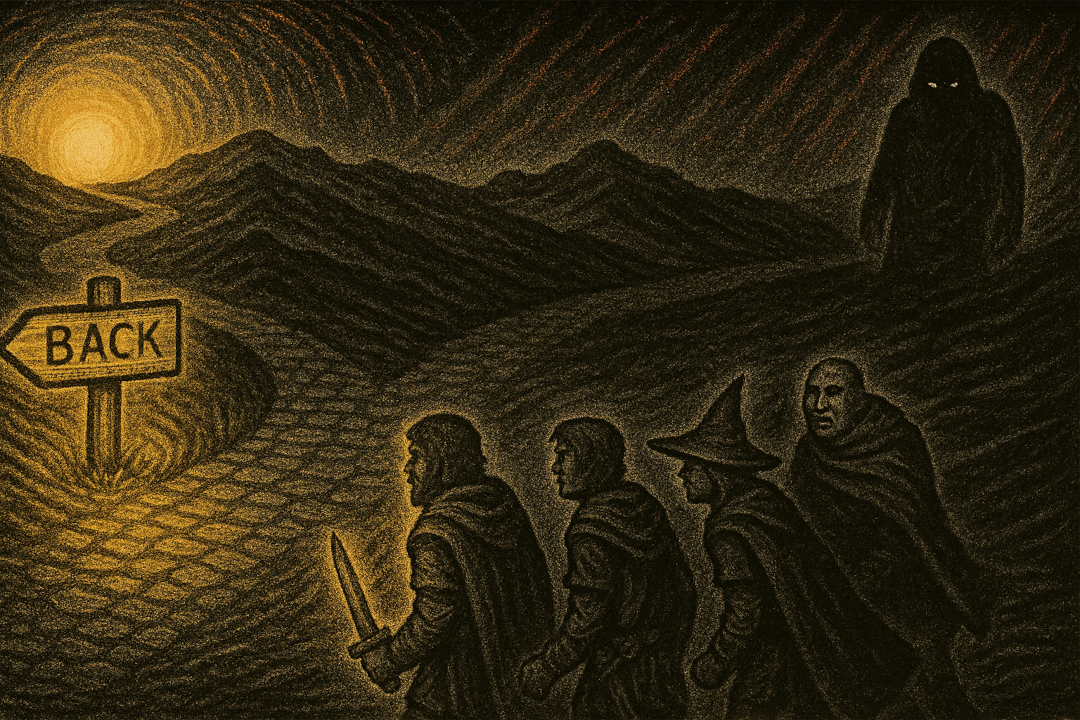
So I made the choice a Dastardly would usually avoid: to be brave. To admit that, in order to move forward, I must first go back.
DooM & Dastardlies returns to alpha phase.
Why Now?
During beta testing, a pattern emerged. Players wanted more depth and the possibility to “play more.” Many asked how their Dastardly could evolve through multiple Trials. The current framework shines in one-shots but still lacks a campaign mode. The ambition of the project has always been broader: a critique, a parody, and a homage to RPGs as an “ecosystem.” And nothing is more RPG than a campaign that tests characters until it changes them.
What's Changing
Character Evolution
Forget levels and XP. I am working on a deeper progression system that uses Desires and Fears as vectors of growth, connecting them to an intriguing concept I recently discovered: Maslow's hierarchy of needs. The pyramid is a (simplified) structure of human needs, which adapts well as a schematic representation for RPG characters. At first, they seek food, shelter, and safety; as they advance, they begin to crave higher needs such as love and self-realization.
Back to DooM & Dastardlies: with each Trial, Desires and Fears transform. Dastardlies do not become “stronger”—they become more complex, and their wants grow greater.
Campaign Rhythm
While looking for inspiration on how to handle character growth, I reread Blades in the Dark and Agon, but I also found hints for something else. The alternation of play and downtime fits the rhythm I wanted for the game: an alternation between Trials and Interludes. The Interlude takes place on Kael, the Dastardlies’ primary world. There they can train, heal, pursue their Desires, but options will be limited, forcing them to choose what matters most.
This setup convinces me, but I am uncertain about the weight of worldbuilding. How detailed should Kael be, considering it only appears in this phase? Would it be better to provide a general outline and let Kael emerge in play, or to give a map and key features? I fear that time invested in building Kael might be better spent developing other aspects of the game.
Trust and the Secret Sleight Throw
These are the core of the system:. Bluff, trust, deception. They will necessarily need to be adjusted to support the new Traits and XP acquisition. I also want to use these changes to streamline the procedure while finding concrete ways to engage the entire table during the Sleight Throw Procedure.I am considering directions such as small side bets for spectators and levers that modulate the stakes.
However, I also worry that each Fate Roll could become too long, eating away at the time dedicated to the other parts of the adventure.
Next Steps
Some chapters will be entirely rewritten, others adapted to create a coherent framework. Playtests will resume in alpha mode, with targeted objectives to see if and when the game breaks.
Unfortunately, this also means I will have to postpone the release of the manual version I wanted to share here on itch for you to test. Still, I have a couple of requests for you.
What do you think of the changes I want to bring to DooM & Dastardlies? Share your thoughts and tell me about your experiences with other games that tackle similar themes. And if you were a playtester of previous versions, write me privately if you’d like to help with this new one. The more voices at the table, the better the game becomes.
The next devlog will arrive with the first alpha version. In the meantime, if you want to reread old posts or understand what the hell I'm talking about, you'll find everything on the project page.
And remember: DooM is watching you. Always.
Italiano
Il coraggio di fare un passo indietro
Luglio e agosto sono stati mesi di gioco intenso, settembre l'ho passato a riflettere. Prima della GnoccoCon ho playtestato DooM & Dastardlies in molte occasioni, sia al tavolo sia online, con gruppi diversi per composizione ed esperienza. Ho messo il gioco in mano a veterani, a designer curiosi e a giocatori che amano smontare i framework, cercando ogni volta di stressare una parte diversa delle regole. Questo lavoro di fino mi ha permesso di arrivare alla convention con una consapevolezza più chiara su ciò che funziona e su ciò che va ripensato.
Alla GnoccoCon ho avuto la conferma. Giocare lì è sempre un piacere. È stato il mio secondo anno e ci tornerò volentieri anche il prossimo. Grazie all'organizzazione, allo staff e ai volontari per l'accoglienza e la cura. Tra un tiro segreto e l'altro ho capito una cosa semplice e scomoda.
Il gioco funziona, ma non è abbastanza per quello che mi hanno chiesto i playtester.
E allora ho fatto la scelta che un Dastardly tenderebbe a evitare: essere coraggioso. Ammettere che, per andare avanti, devo prima tornare indietro.
DooM & Dastardlies torna in fase alpha.
Perché proprio ora
Durante i beta test è emerso un pattern. I giocatori volevano più profondità e la possibilità di "giocare di più". In molti mi hanno chiesto come sarebbero potuti evolvere i loro Dastardly attraversando più Prove. L'attuale impianto brilla in one shot, ma manca ancora una modalità campagna. L'ambizione del progetto è sempre stata diversa: una critica, una parodia e un omaggio al GdR come "ecosistema". E nulla è più GdR di una campagna che mette alla prova i personaggi fino a cambiarli.
Cosa sta cambiando
Evoluzione del personaggio
Dimentichiamo livelli e punti esperienza. Sto lavorando a una progressione profonda, che usa Desideri e Paure come vettori di crescita, collegandoli ad un concetto interessante che ho scoperto ultimamente: la piramide dei bisogni di Maslow.
La piramide rappresenta una struttura (semplificata) di bisogni crescenti di una persona, che ben si adatta ad una rappresentazione schematica per un personaggio di un GdR. All'inizio i personaggi cercano cibo, riparo e sicurezza, avanzando incominciano a sentire necessità più alte come l'amore e l'autorealizzazione.
Tornando a DooM & Dastardlies, con le Prove i Desideri e le Paure si trasformano. I Dastardly non diventano più "forti", diventano più complessi, desiderano sempre di più.
Il ritmo della campagna
Nel tentativo di farmi ispirare su come gestire l'evoluzione del personaggio ho iniziato a rileggere con cura Blades in the Dark e Agon, ma vi ho trovato ispirazione anche per altro. L'alternanza gioco e downtime si sposa con il ritmo che volevo dare al gioco, un'alternanza tra Prove e Intermezzi. L'Intermezzo avverrà su Kael, il mondo primario dei Dastardly. Lì i Dastardly potranno allenarsi, curarsi, inseguire i propri Desideri, ma le cose da fare saranno limitate e dovranno scegliere cosa è più importante per loro..
Questa impostazione mi convince, ma ho un dubbio riguardo il peso del worldbuilding. Quanto dovrebbe essere dettagliata Kael visto che ci si giocherà solo in questa fase? Sarebbe meglio dare un'idea di massima e lasciare definire Kael in una narrazione emergente o dare una mappa o dei punti chiave di quel mondo? Ho paura che il tempo dedicato alla costruzione del worldbuilding di Kael possa essere investito meglio nello sviluppo di altri aspetti del gioco.
La Fede e Il Tiro Sorte Segreto
Sono il cuore del sistema. Bluff, fiducia, inganno. Andranno necessariamente modificati per supportare i nuovi Tratti e le modalità di acquisizione dell'esperienza. Vorrei approfittare di queste modifiche necessarie per semplificare la procedura ma anche per trovare modi concreti per coinvolgere tutto il tavolo durante la Procedura del TS. Sto valutando piste come piccole scommesse laterali per chi osserva e leve che modulano la posta in gioco.
Ho però un dubbio anche su questo: ogni Tiro Sorte potrebbe diventare troppo lungo e rischiare di mangiarsi il tempo delle altre parti dell'avventura.
Come si procede
Alcuni capitoli andranno completamente riscritti, altri adattati per avere un framework coerente. I playtest ripartiranno in modalità alpha test, ovvero con obiettivi mirati, per vedere se e quando il gioco si romperà.
Purtroppo questo vuol dire anche che dovrò rimandare la versione del manuale che volevo pubblicare qui su itch per farvela testare, ma ho comunque un paio di richieste da farvi.
Cosa ne pensate delle modifiche che voglio portare in DooM & Dastardlies? Datemi i vostri pareri e raccontatemi le vostre esperienze anche con altri giochi che affrontano tematiche simili, se invece siete stati già playtester delle versioni passate, scrivetemi in privato se volete aiutarmi con questa nuova versione. Più voci arrivano al tavolo, più il gioco migliora.
Il prossimo devlog arriverà con la prima versione alpha. Nel frattempo, se volete rileggere i vecchi post o capire di cosa diavolo sto parlando, trovate tutto sulla pagina del progetto.
E ricordate: DooM vi osserva. Sempre.
Leave a comment
Log in with itch.io to leave a comment.